
Understanding the Anatomy of an Engagement Ring
Engagement Ring Guidance
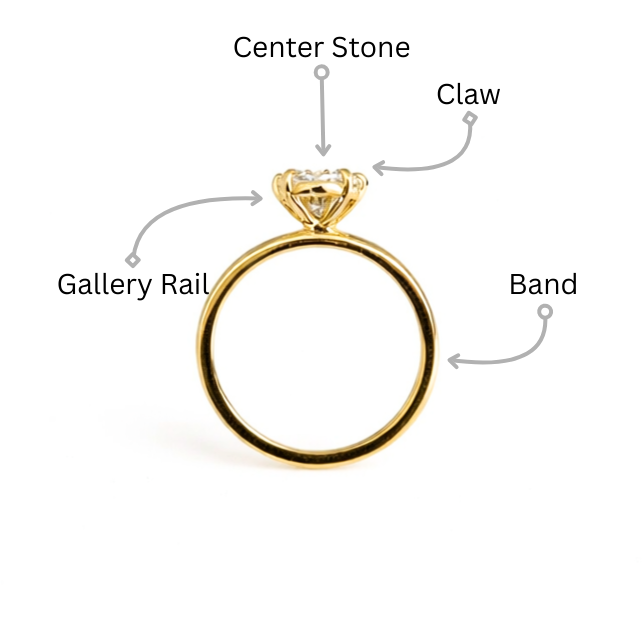
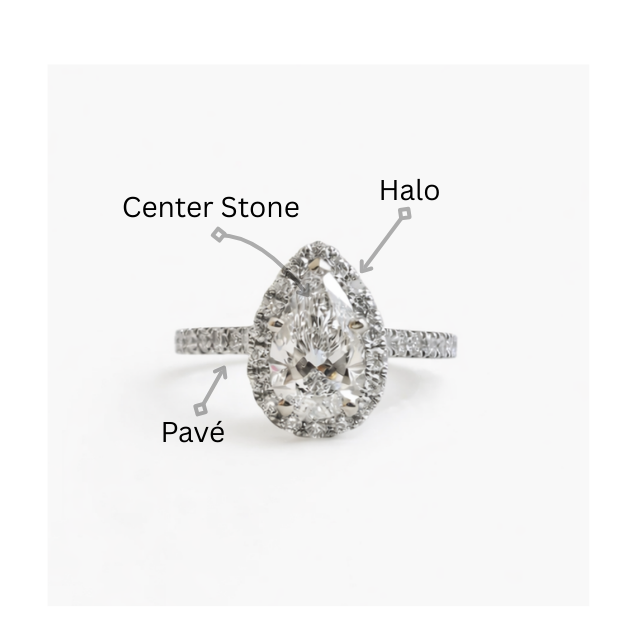
An engagement ring is a carefully engineered piece of jewellery, made up of multiple components that work together to balance beauty, security, comfort, and longevity. Understanding these elements will help you make a well-informed decision when selecting or custom-designing your dream ring.
Setting (Mounting)

18K Maeve Lab-grown Diamond Ring

14K Half Bezel Lab-grown Diamond Ring
The setting, also known as the mounting, is the metal framework that holds and supports all the stones in the ring. It includes the structure for the centre stone as well as any side or accent stones, but does not include the centre stone itself.
The setting plays a critical role in:
Securing the stones
Determining the overall profile and height of the ring
Influencing how much light enters the stones
Defining the ring’s style (classic, modern, vintage, or contemporary)
Claws (Prongs)
18K "The Classic" Oval Moissanite Ring
18K "The Classic" Oval Moissanite Ring
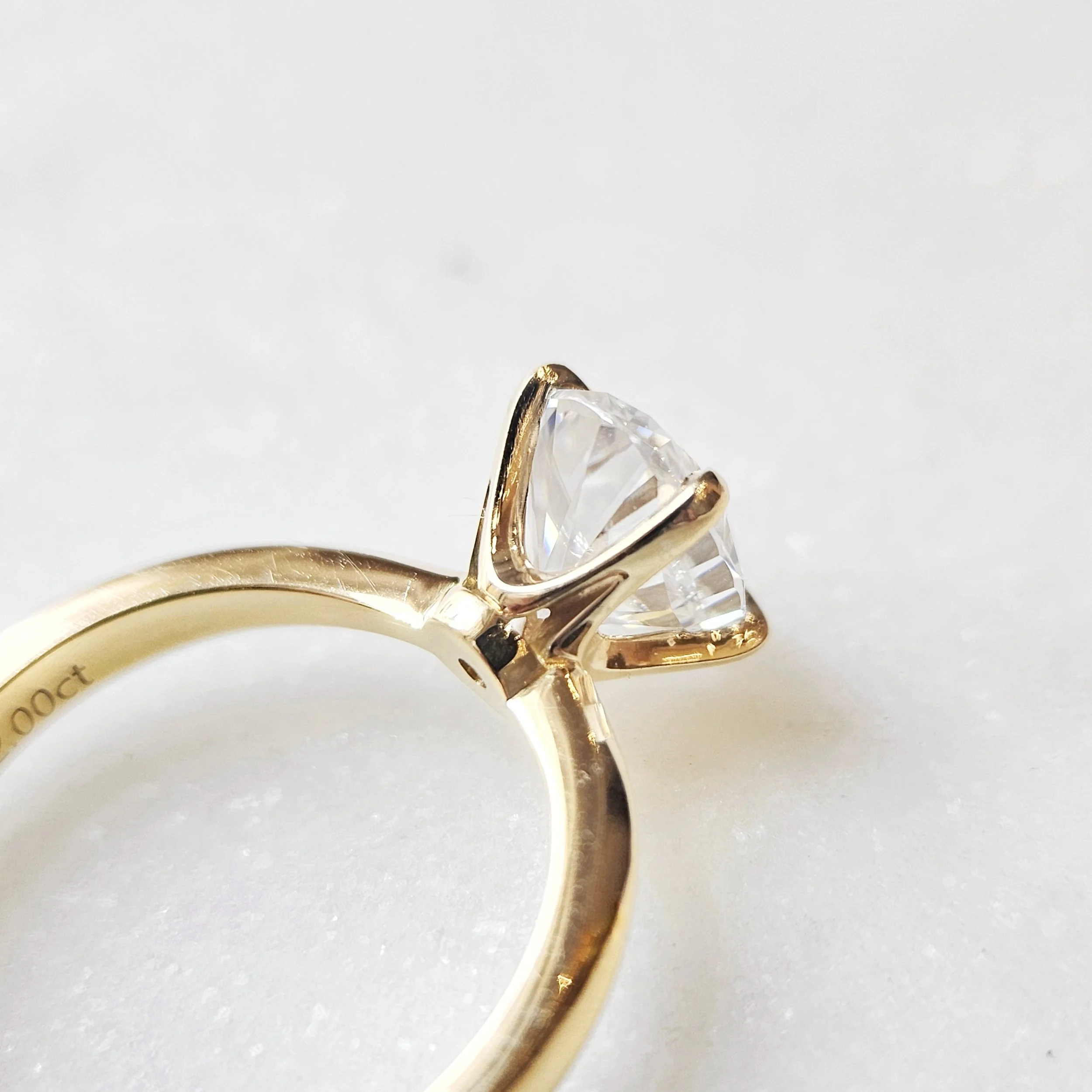
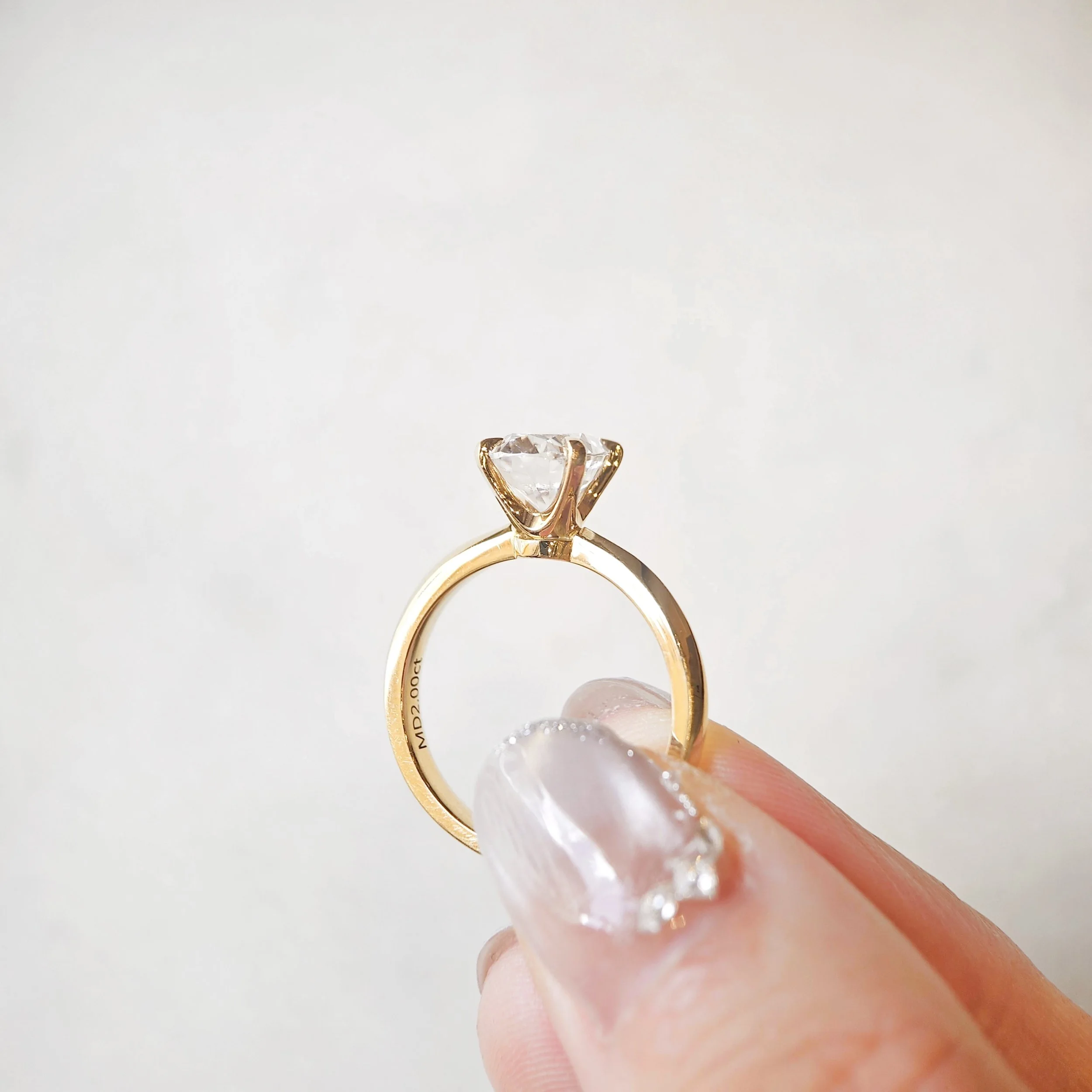
Claws are the small metal arms that grip and secure the centre stone in place. The most common configurations are four-claw and six-claw settings:
Four claws allow more light exposure and a slightly more modern look
Six claws provide extra security and a softer, more traditional appearance
From a design perspective, claws can also be styled as single, double, or triple claws, which can enhance durability while adding refined detail to the ring’s aesthetic.
Centre Stone
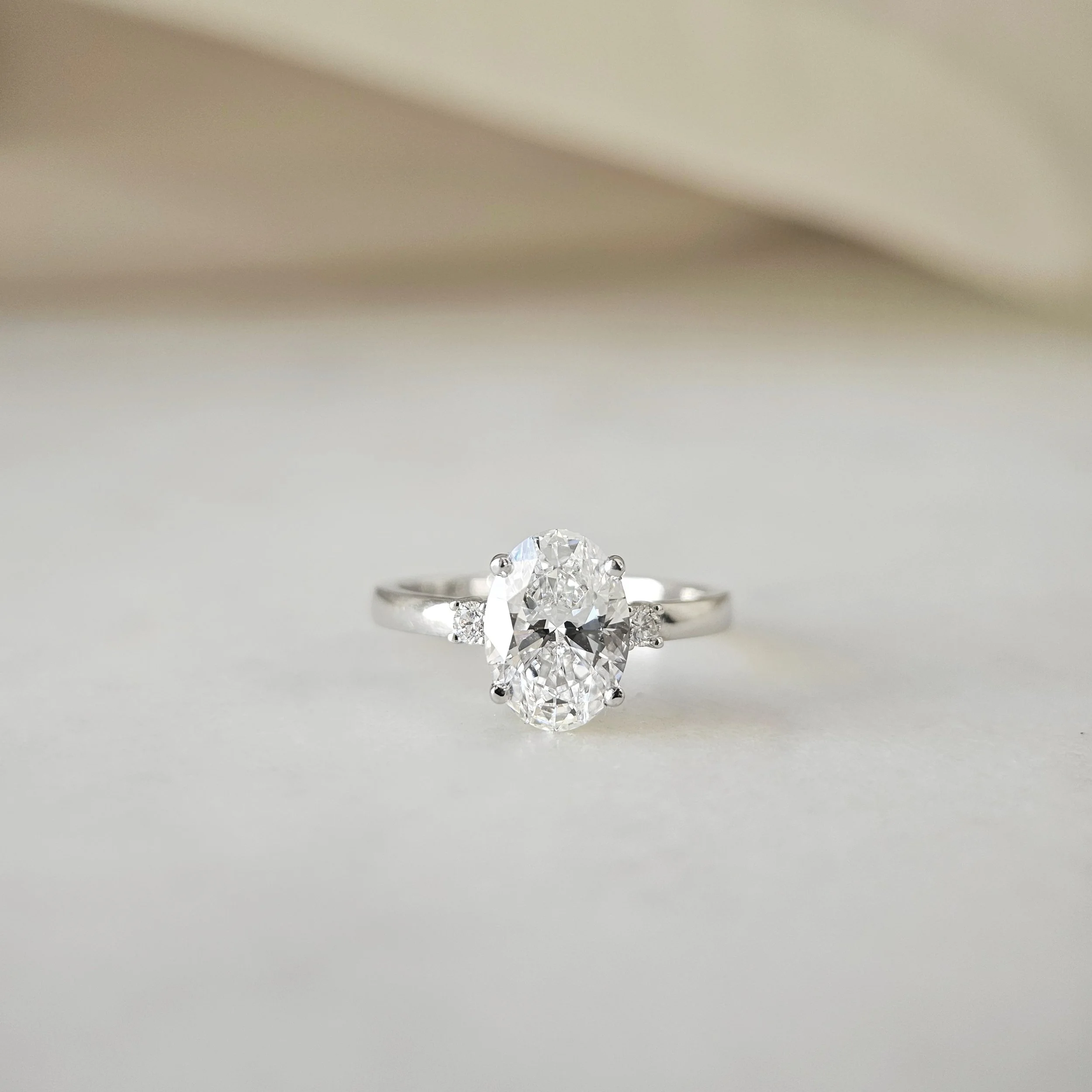
18K Cosmic Lab-grown Diamond Ring
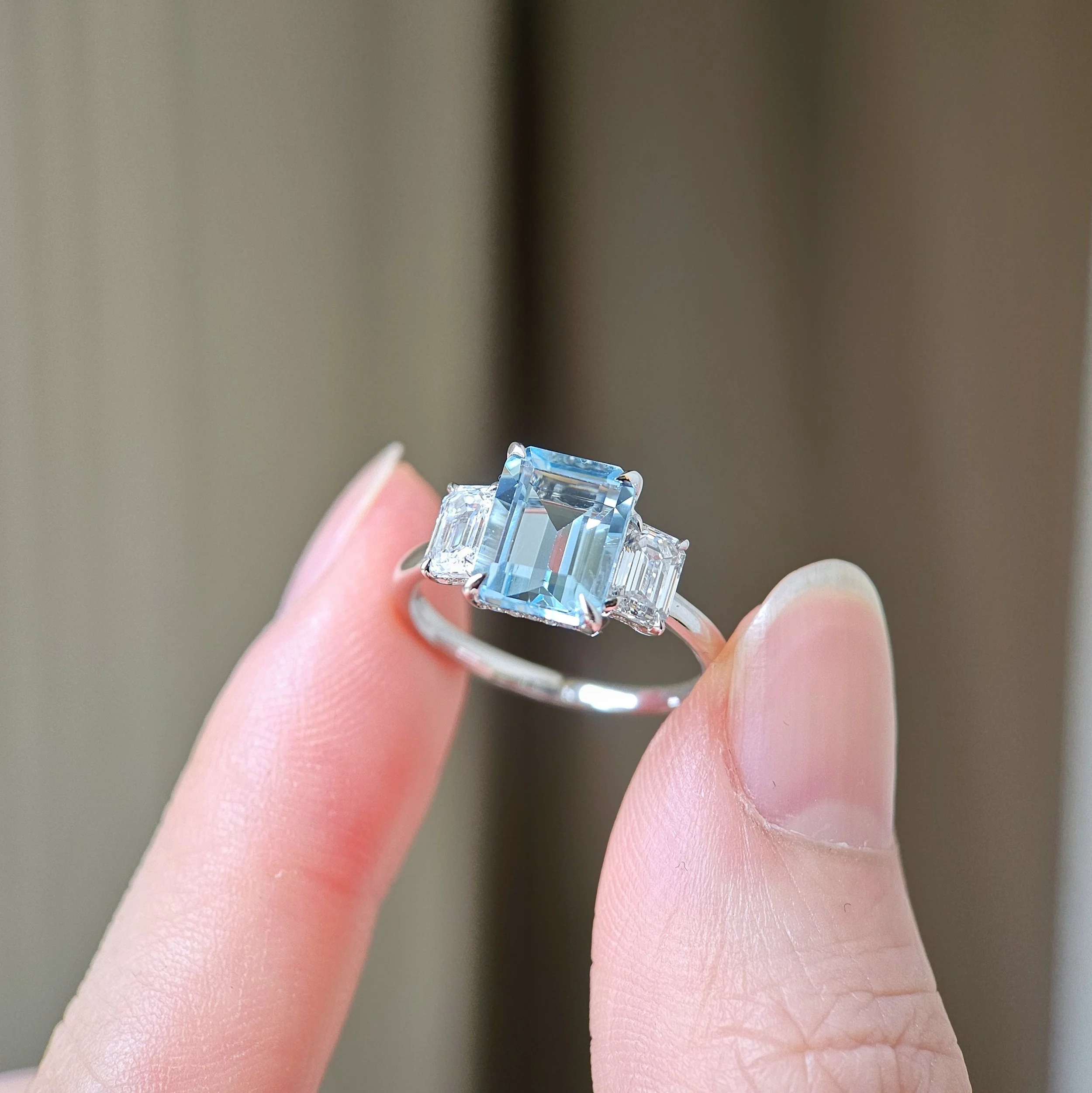
Through-the-Looking-Glass Aquamarine Ring (Lab Diamond Version)
The centre stone is the focal point of the engagement ring. It can be a diamond or a coloured gemstone and is typically the largest and most prominent stone in the design.
The centre stone is held securely by the claws and is chosen based on factors such as:
Cut, colour, clarity, and carat weight
Shape (oval, round, cushion, emerald, pear, etc.)
Personal style and lifestyle considerations
Side Stones (Accent Stones)
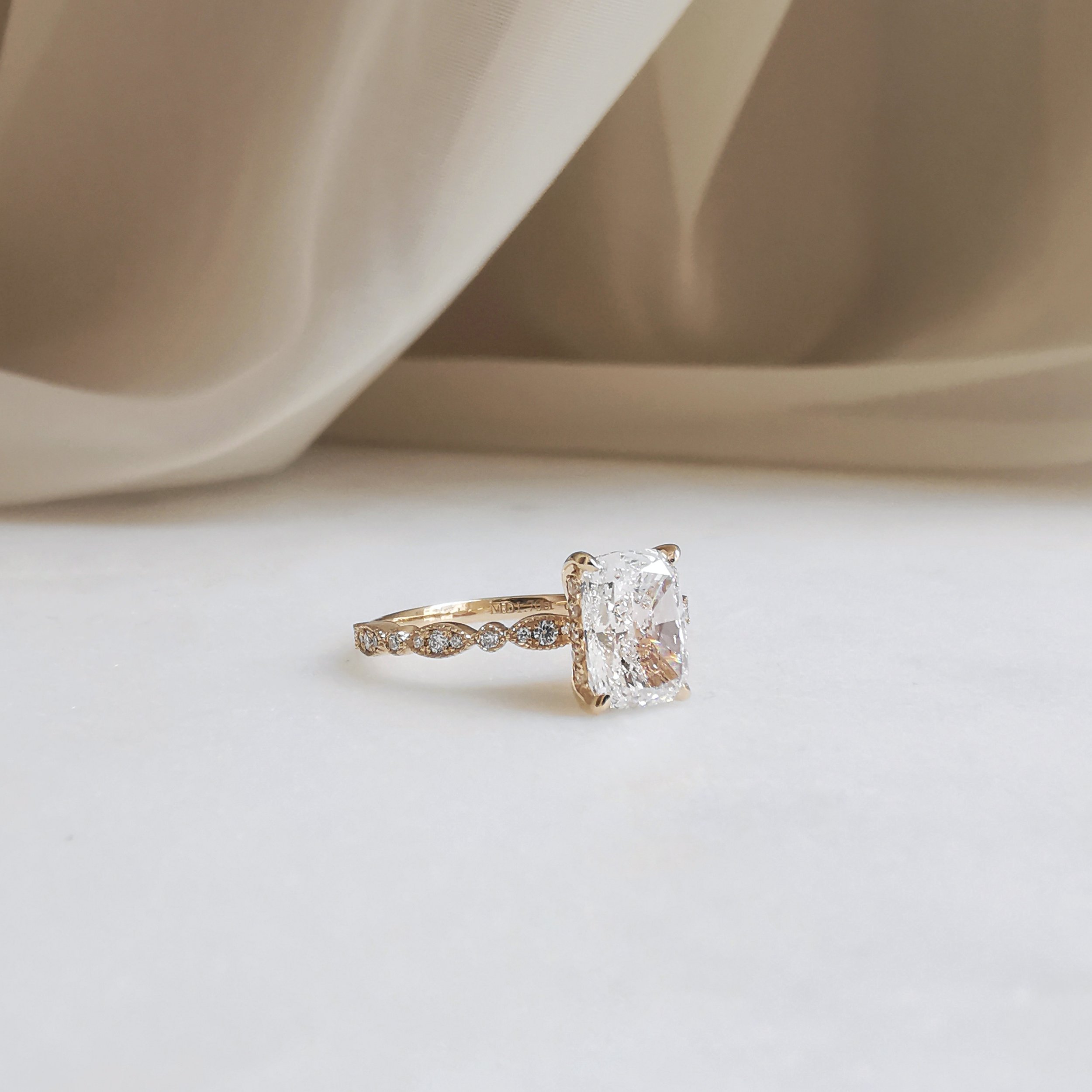
Scarlett Cushion Lab-grown Diamond Ring
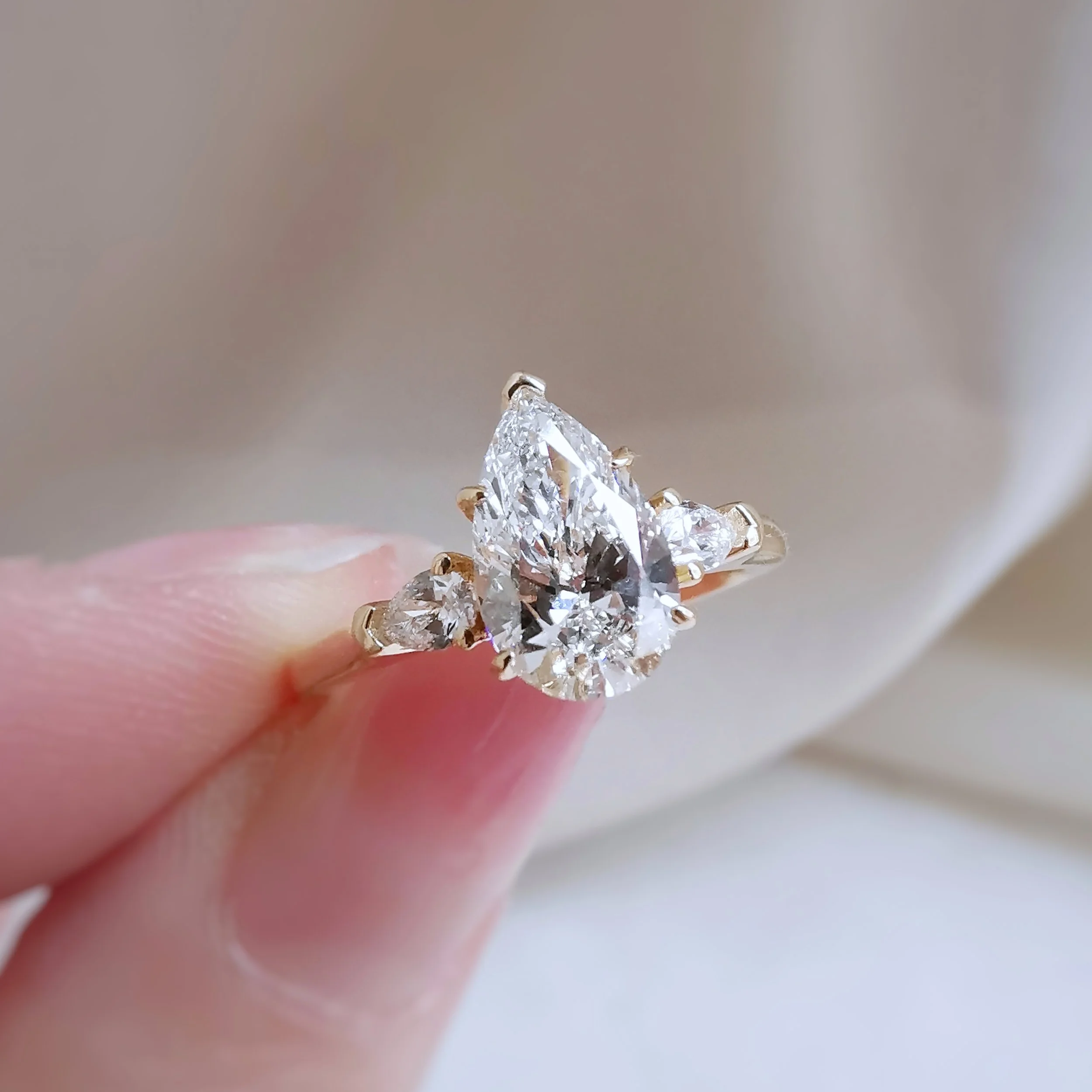
18K Freya Pear Lab-grown Diamond Engagement Ring
Side stones, also known as accent stones, are smaller stones set alongside the centre stone or along the band. Their purpose is to:
Enhance brilliance and sparkle
Add visual balance and detail
Complement and highlight the centre stone without overpowering it
Side stones may be diamonds or gemstones and can be arranged in various styles, including pavé, channel, or claw settings.
Gallery Rail (Support Bar)
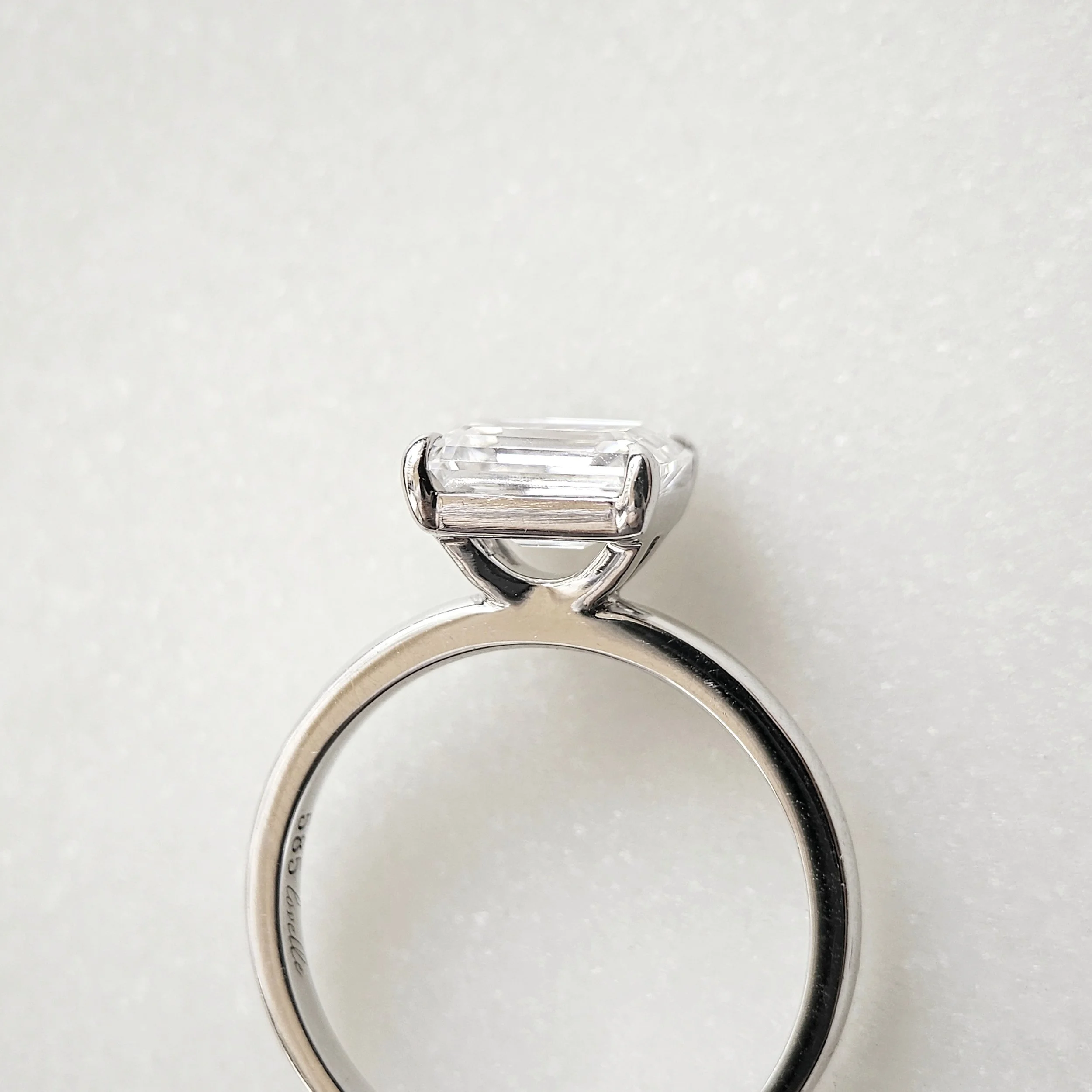
14K Rylee Moissanite Ring
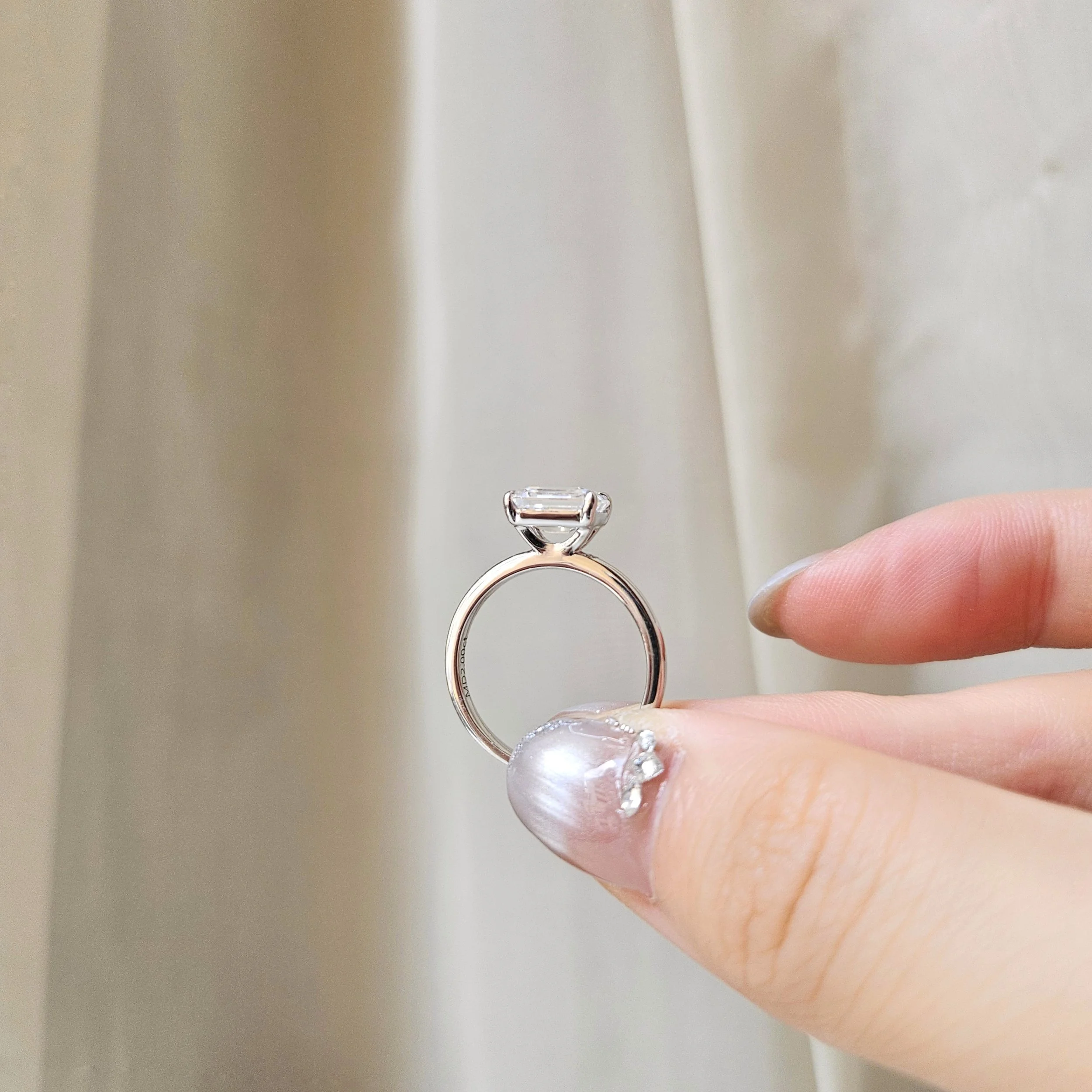
14K Rylee Moissanite Ring
The gallery rail is a small but essential metal band that runs beneath the centre stone, connecting the claws together.
Its function is primarily structural:
It reinforces the claws, keeping them rigid and aligned
It significantly reduces the risk of the centre stone becoming loose
It improves long-term durability, especially for everyday wear
Although subtle, the gallery rail is one of the most important safety features in an engagement ring.
Hidden Halo

14K Emerald Cut Moissanite Ring with Hidden Halo
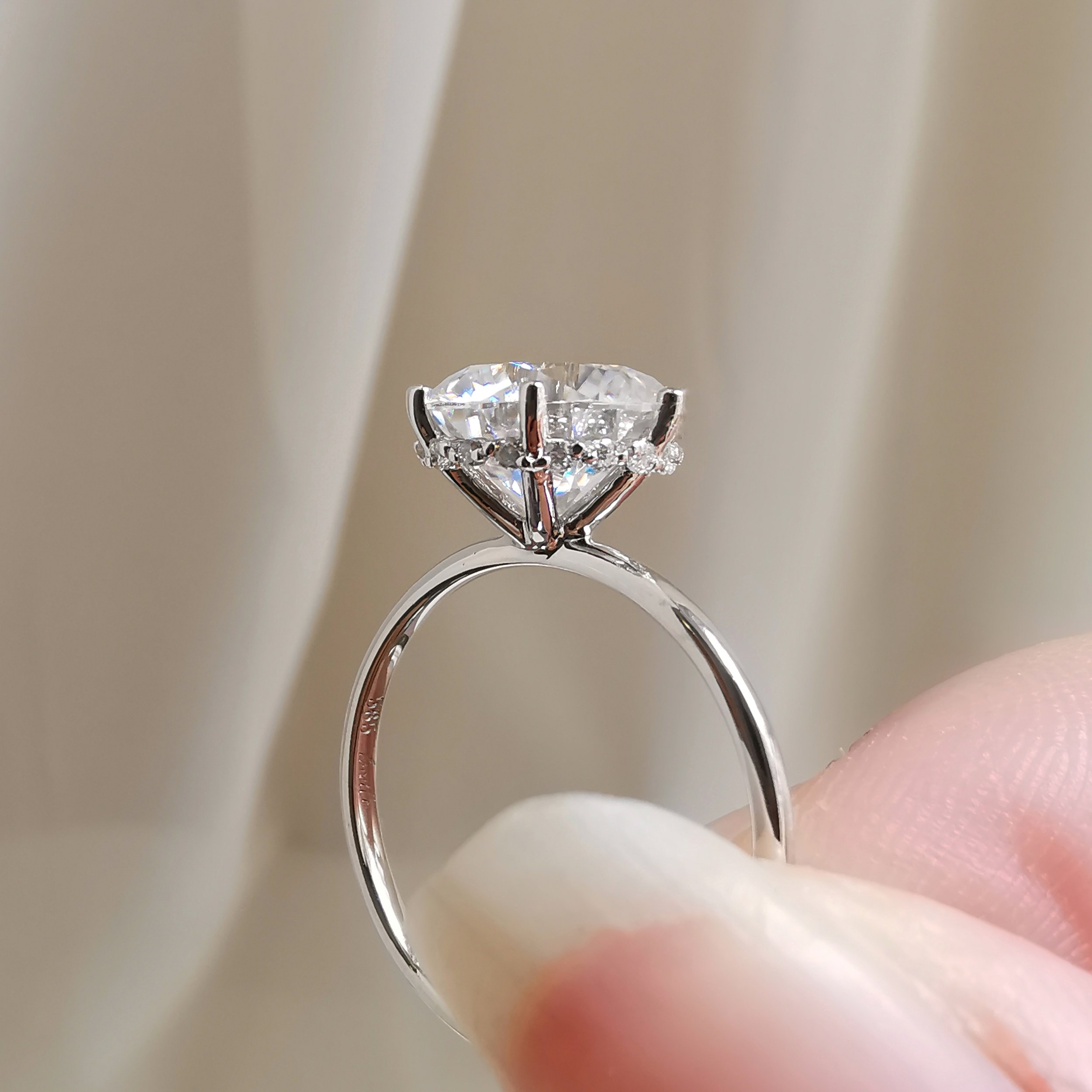
18K "The Diamond Wreath" Moissanite Ring
A hidden halo is a delicate diamond-set rail positioned beneath the centre stone, rather than around it at the top.
Key features:
Set with tiny diamonds for subtle sparkle
Visible mainly from the side view
Adds an extra layer of detail and luxury without overwhelming the design
Enhances the ring’s beauty while keeping a clean top-down look
Halo

Maya Cushion Ring
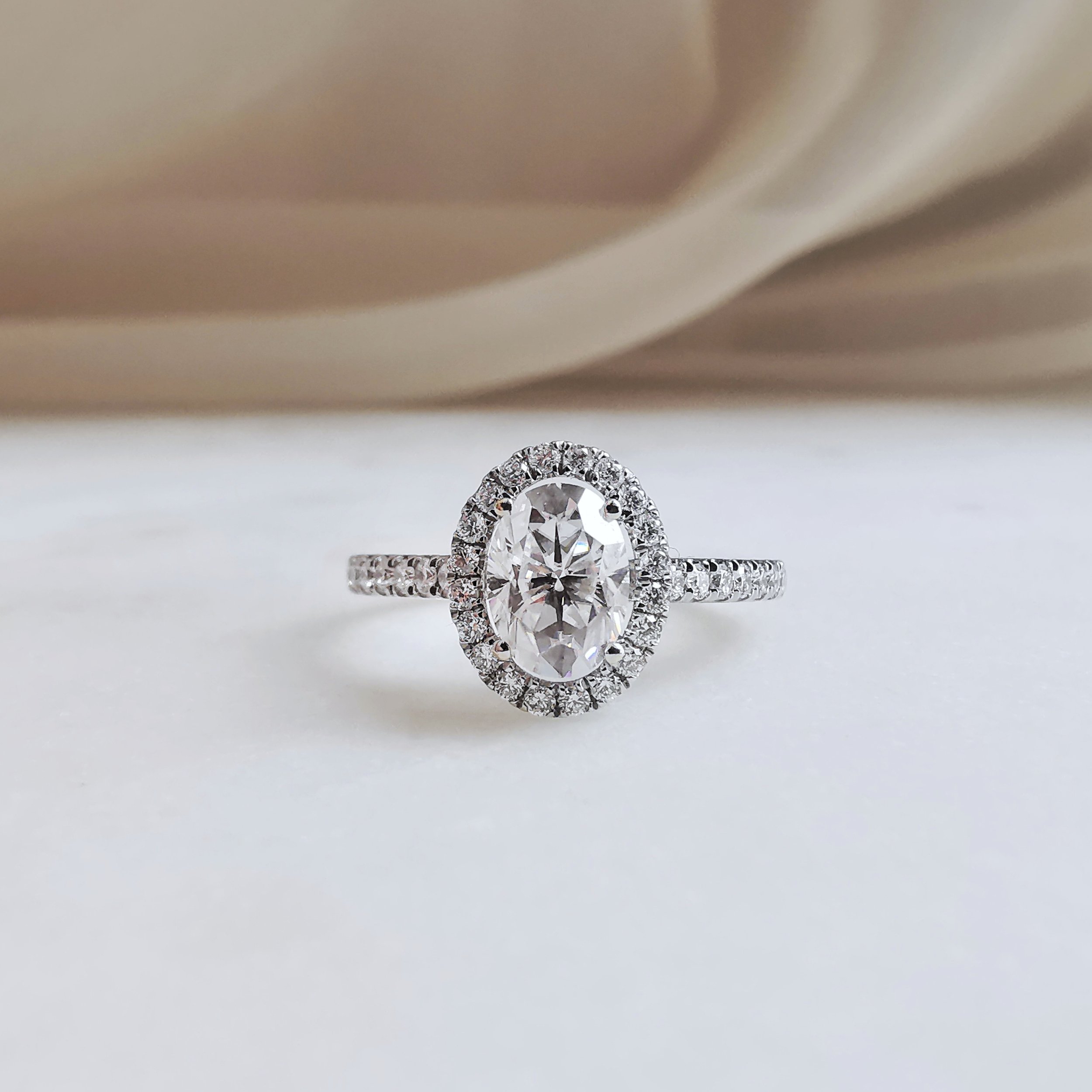
18K Aisley Moissanite Ring
A halo consists of a circle of small diamonds surrounding the centre stone.
Benefits of a halo setting include:
Increased overall sparkle
The illusion of a larger centre stone
Added brilliance and presence on the finger
Halos can be designed in various styles, such as classic, cushion-shaped, double halo, or hidden halo combinations.
Cathedral Setting
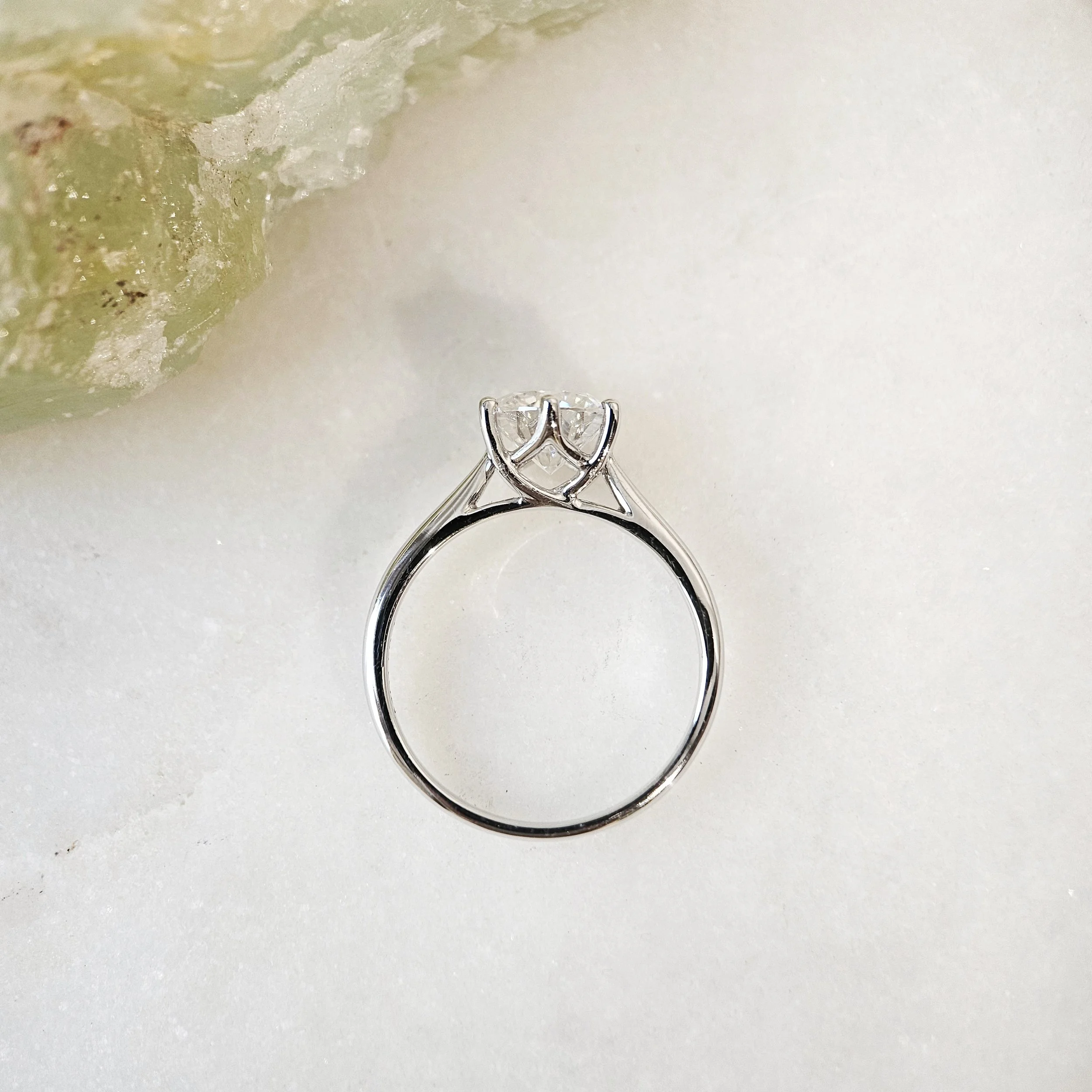
Arianna Moissanite Ring
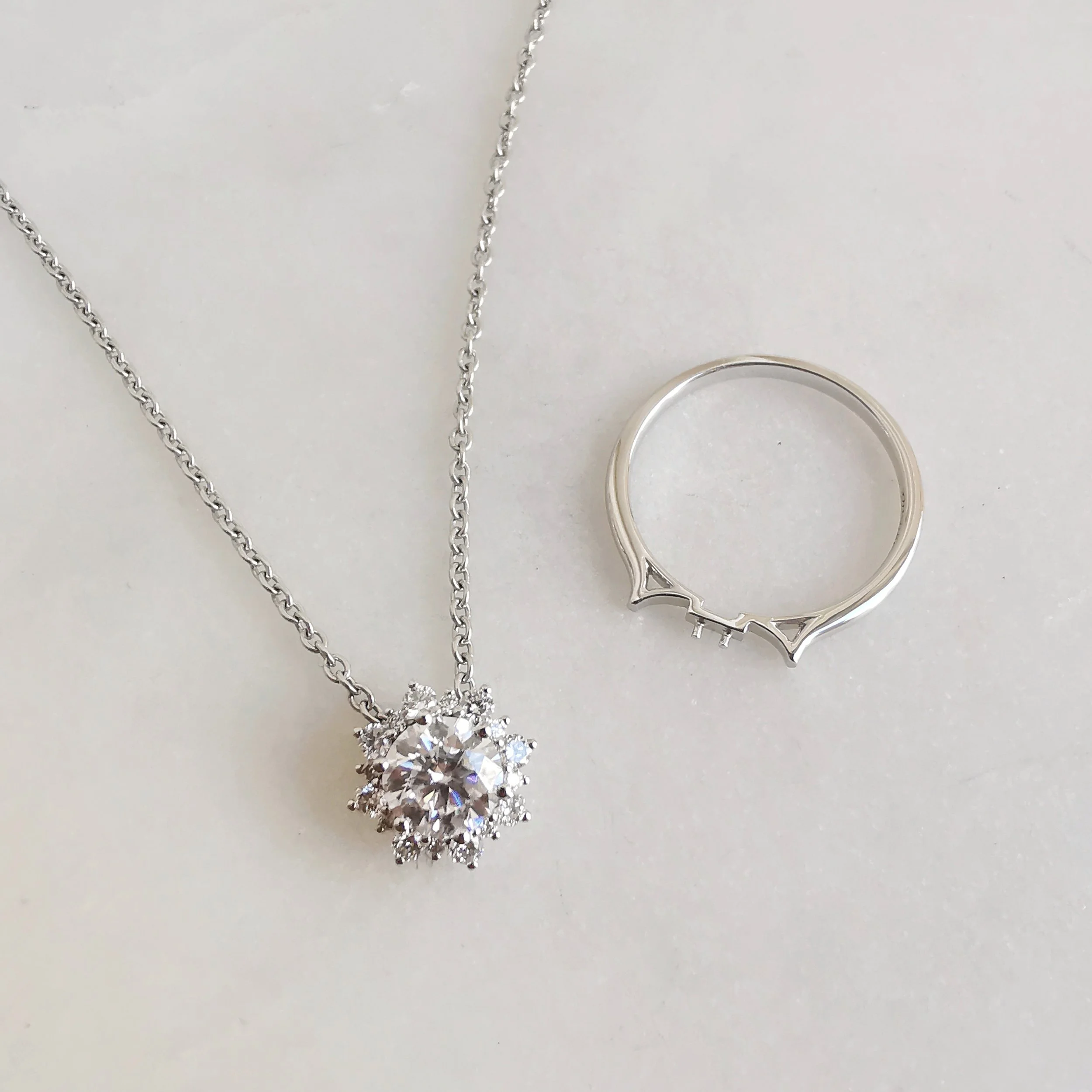
2-in-1 Kylie Moissanite Pendant to Ring
A cathedral setting is a higher-profile design where the band rises up toward the centre stone, resembling the arches of a cathedral.
This setting:
Provides additional structural support
Elevates the centre stone for a more dramatic presence
Creates an elegant, timeless silhouette
Enhphasises height, symmetry, and visual impact
Bridge
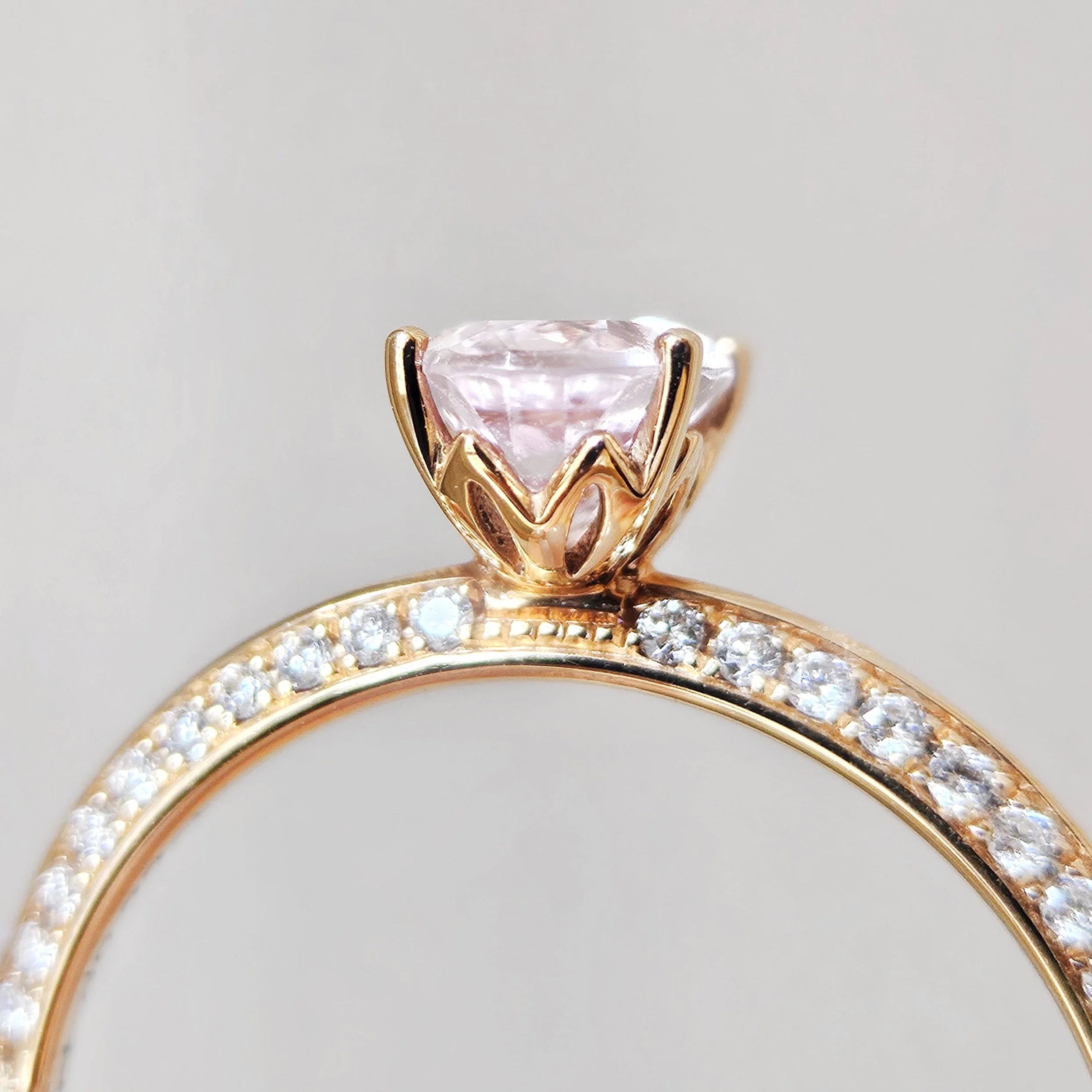
On-Point Knife-Edged Morganite Ring
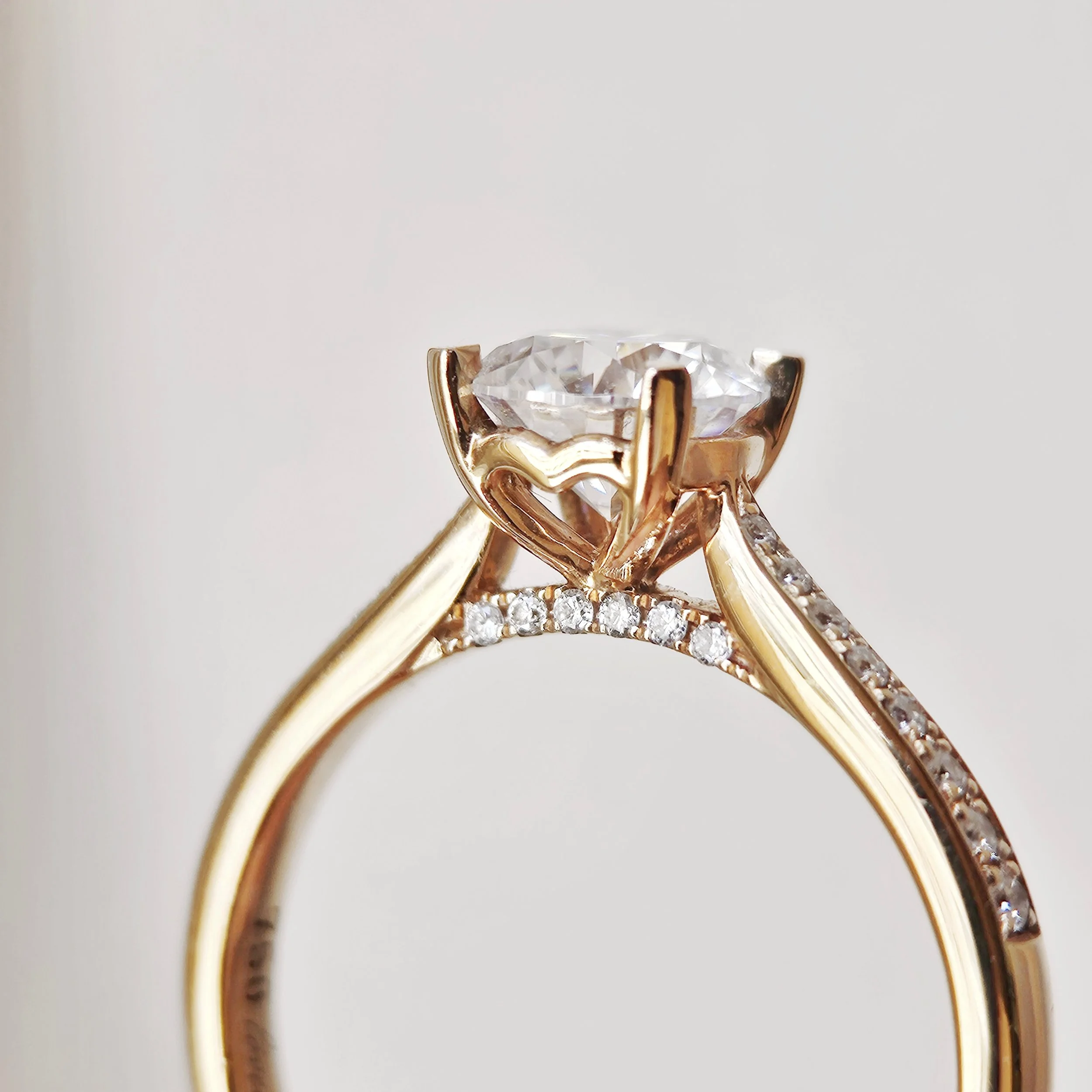
18K Rose Hidden Heart Round Moissanite Ring
The bridge is a structural metal component located directly beneath the centre stone, connecting the gallery (setting) to the band (shank).
Its role includes:
Enhancing the overall strength of the ring
Distributing pressure evenly across the structure
Supporting long-term durability, especially for delicate designs
Band (Shank)
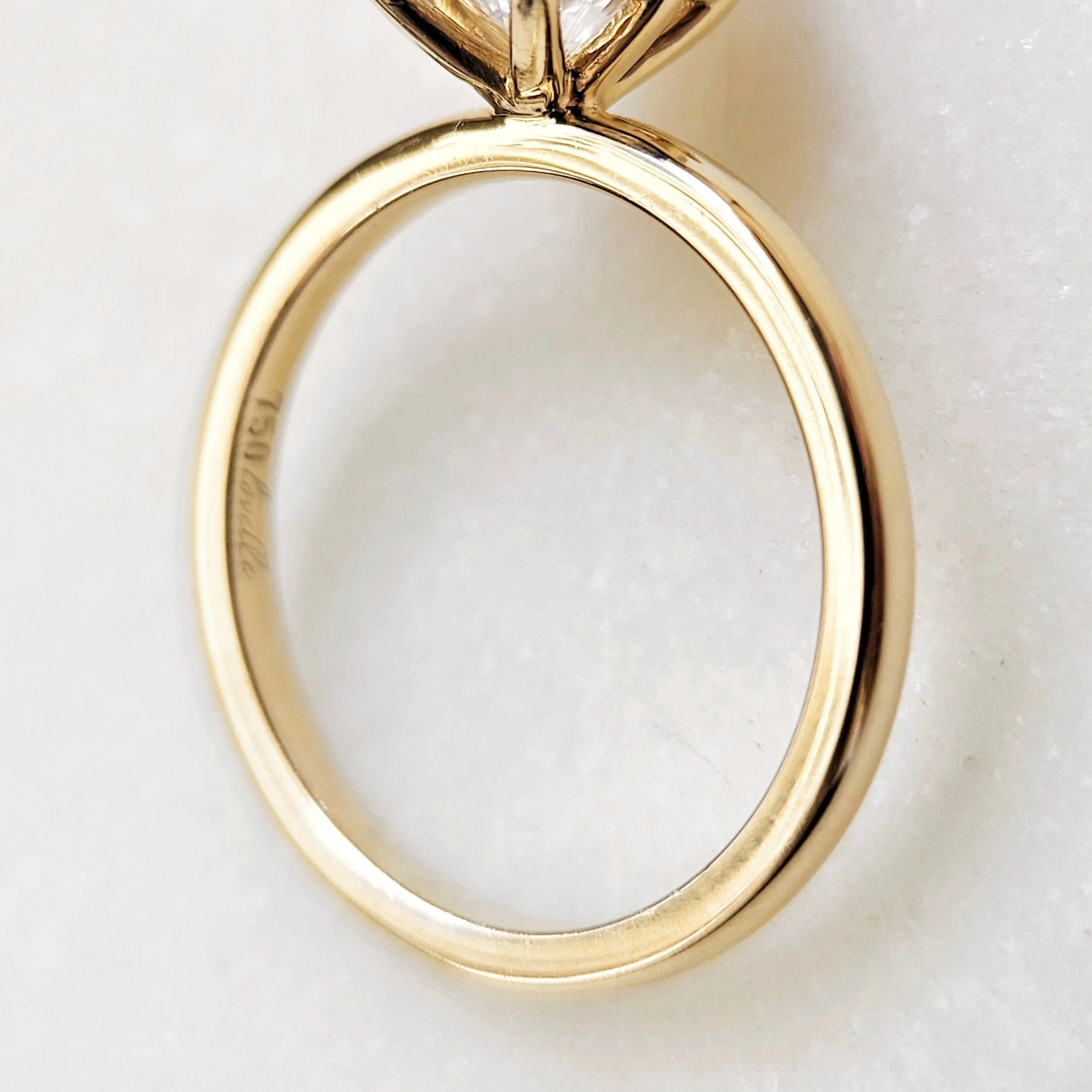
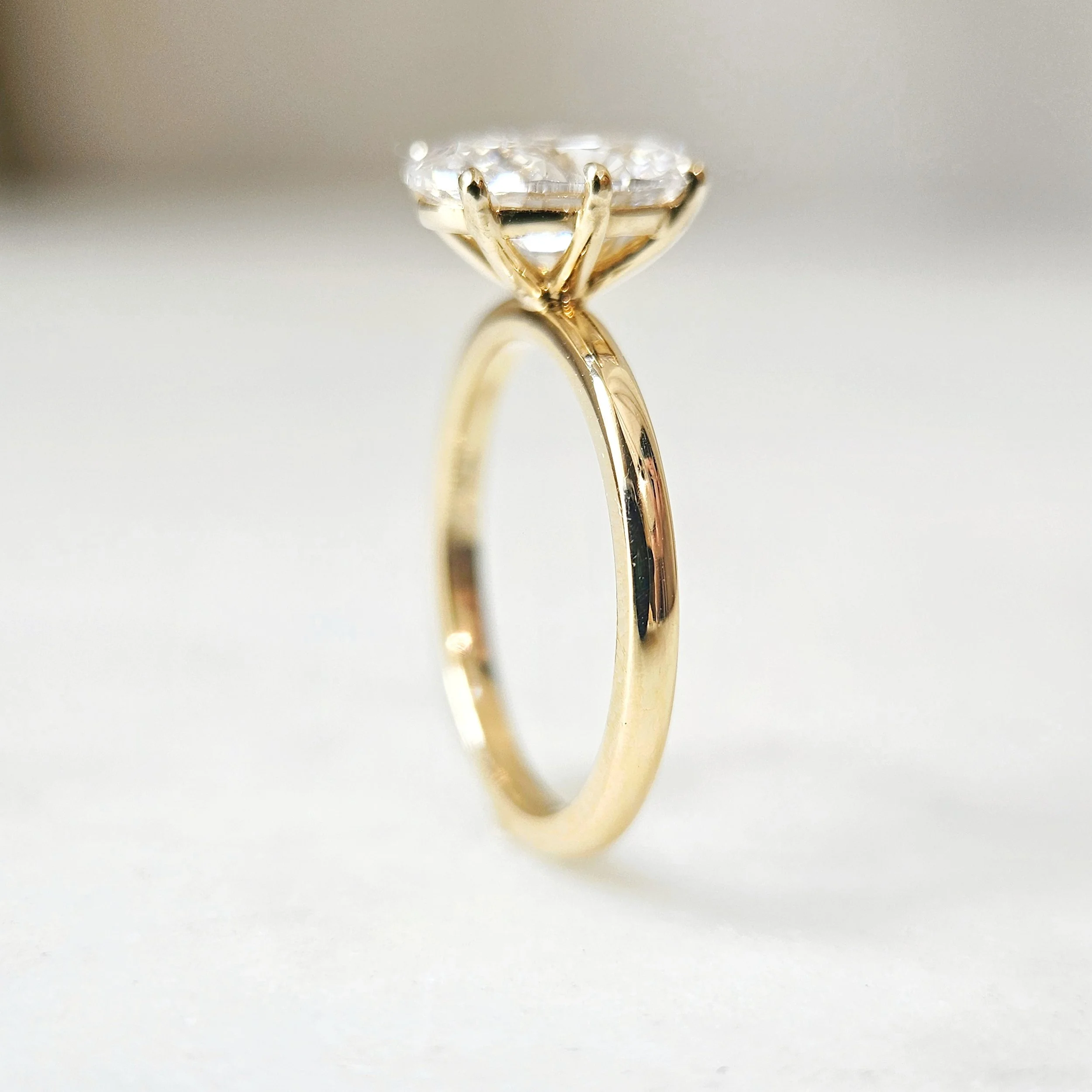
18K Celeste Lab-grown Diamond Ring
18K Celeste Lab-grown Diamond Ring
The band, also known as the shank, is the part of the ring that wraps around the finger.
Band considerations include:
Width and thickness (which affect comfort and durability)
Metal type (yellow gold, white gold, rose gold, platinum)
Plain, pavé, or detailed finishes
The shank plays a major role in comfort, wearability, and overall balance of the ring.
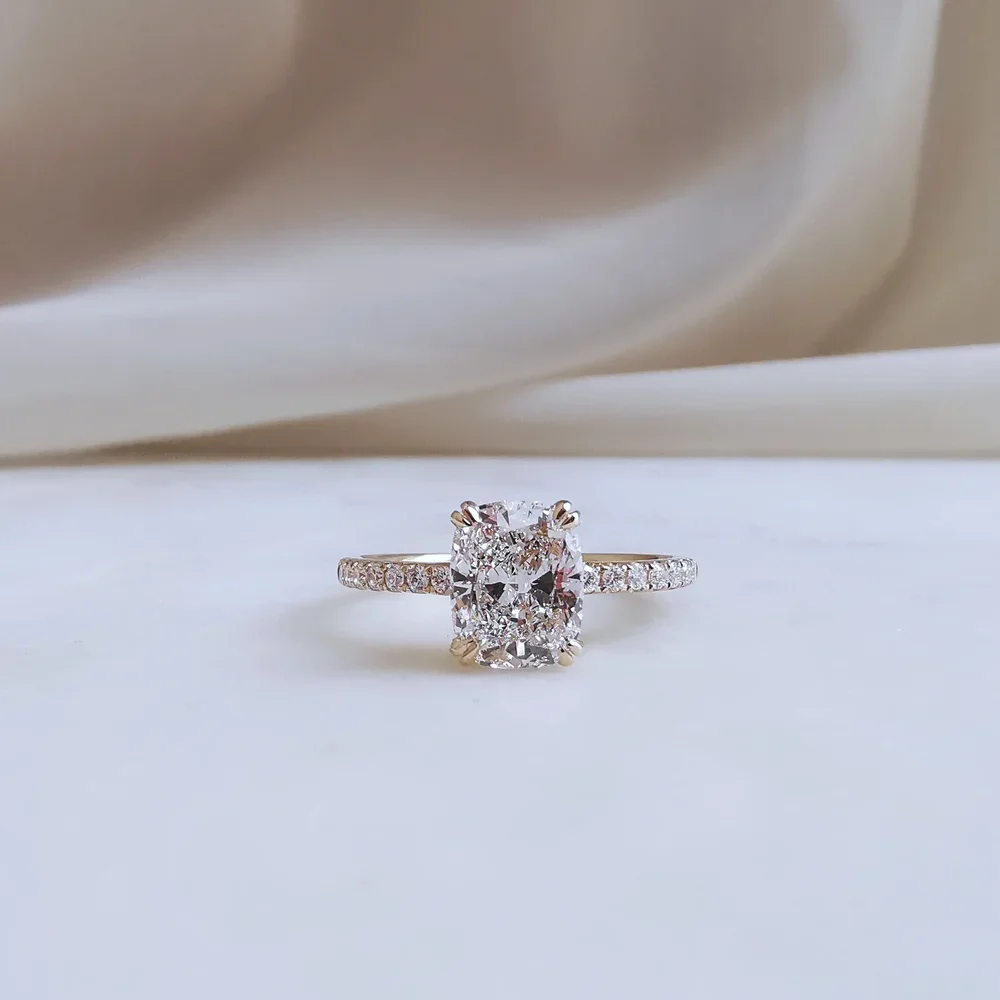
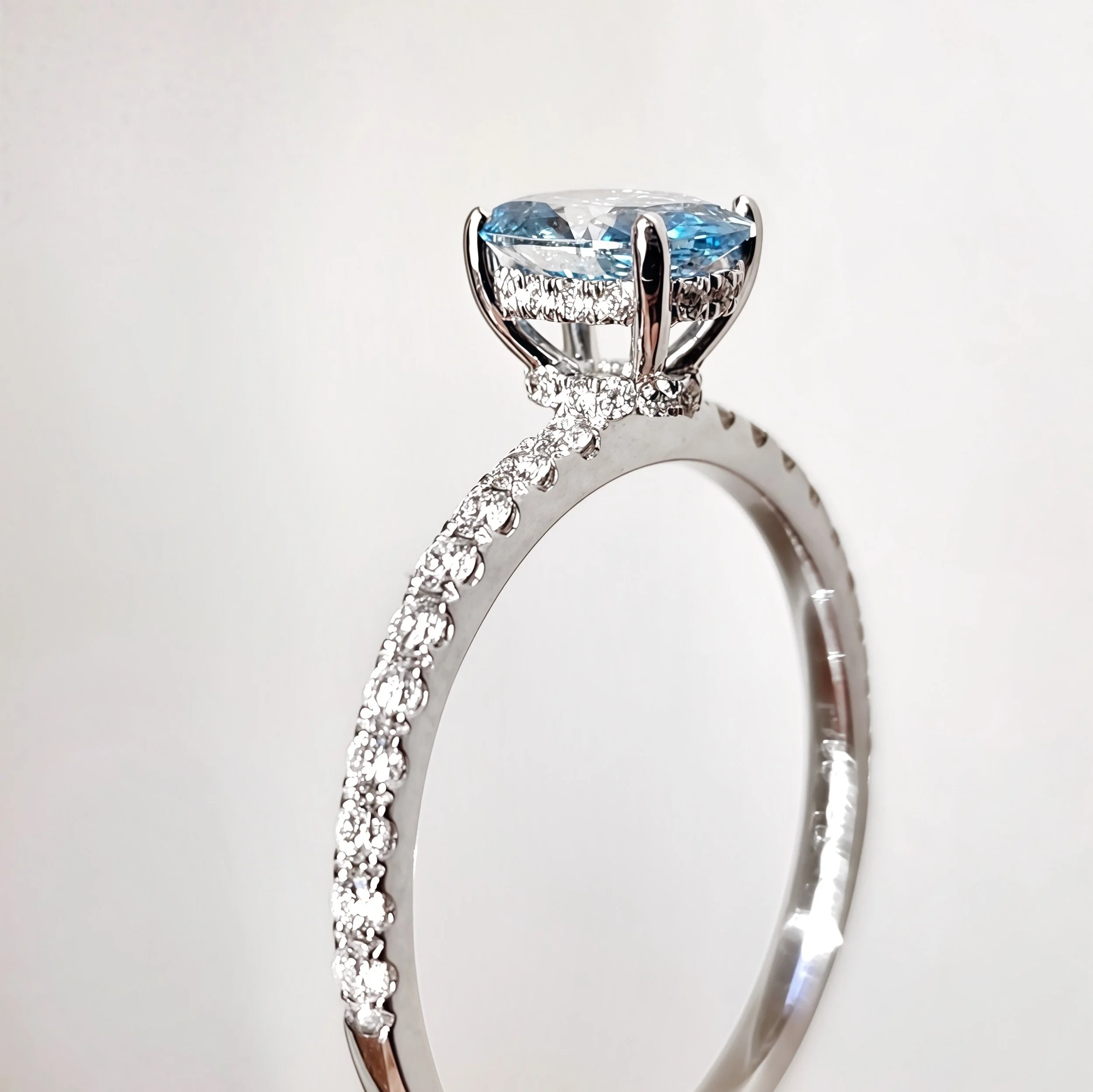
Pavé
14K Gianna Cushion Lab-grown Diamond Ring
18K Astrid Blue Lab-grown Diamond Ring
Pavé refers to small diamonds set closely together along the band, creating continuous sparkle.
Features of pavé settings:
Enhanced brilliance and luxury appearance
Requires precise craftsmanship for security
Can cover part or all of the band, depending on design preference
Hallmarks & Engraving
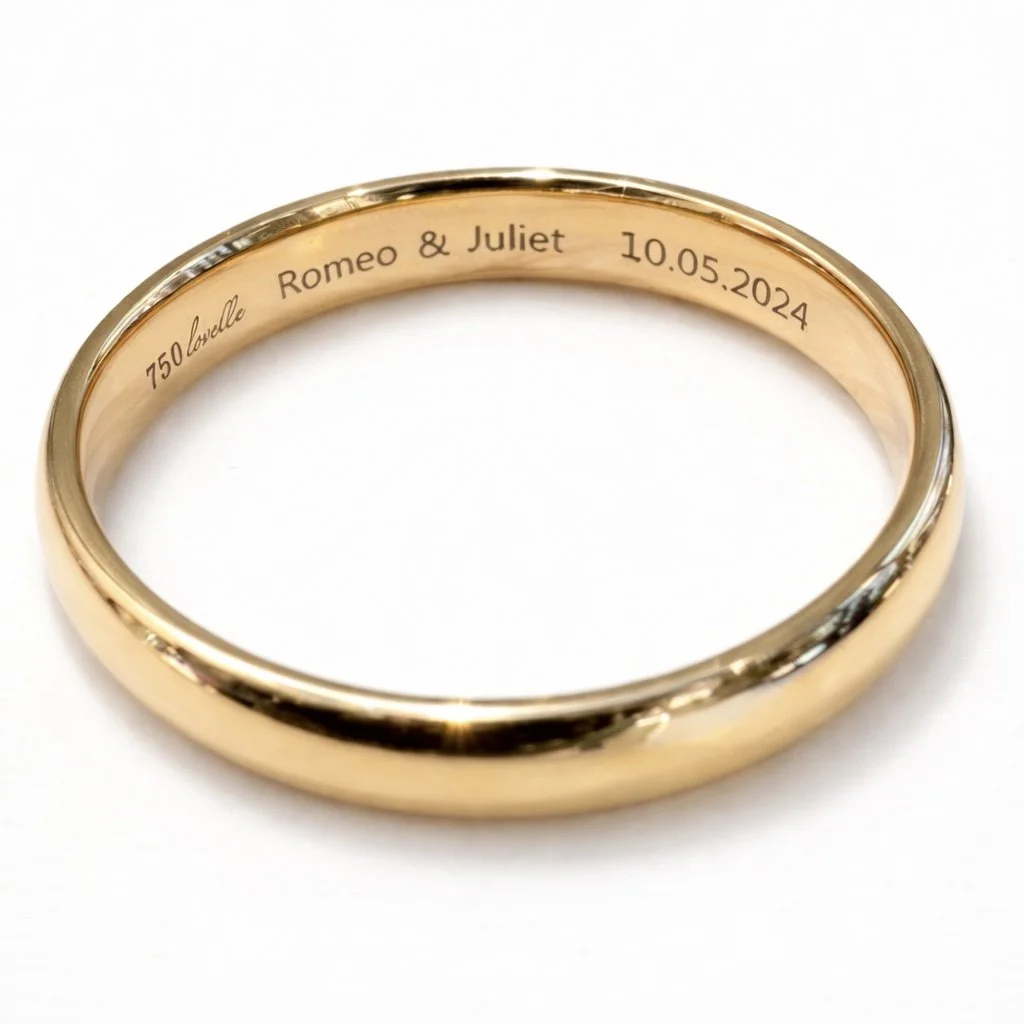
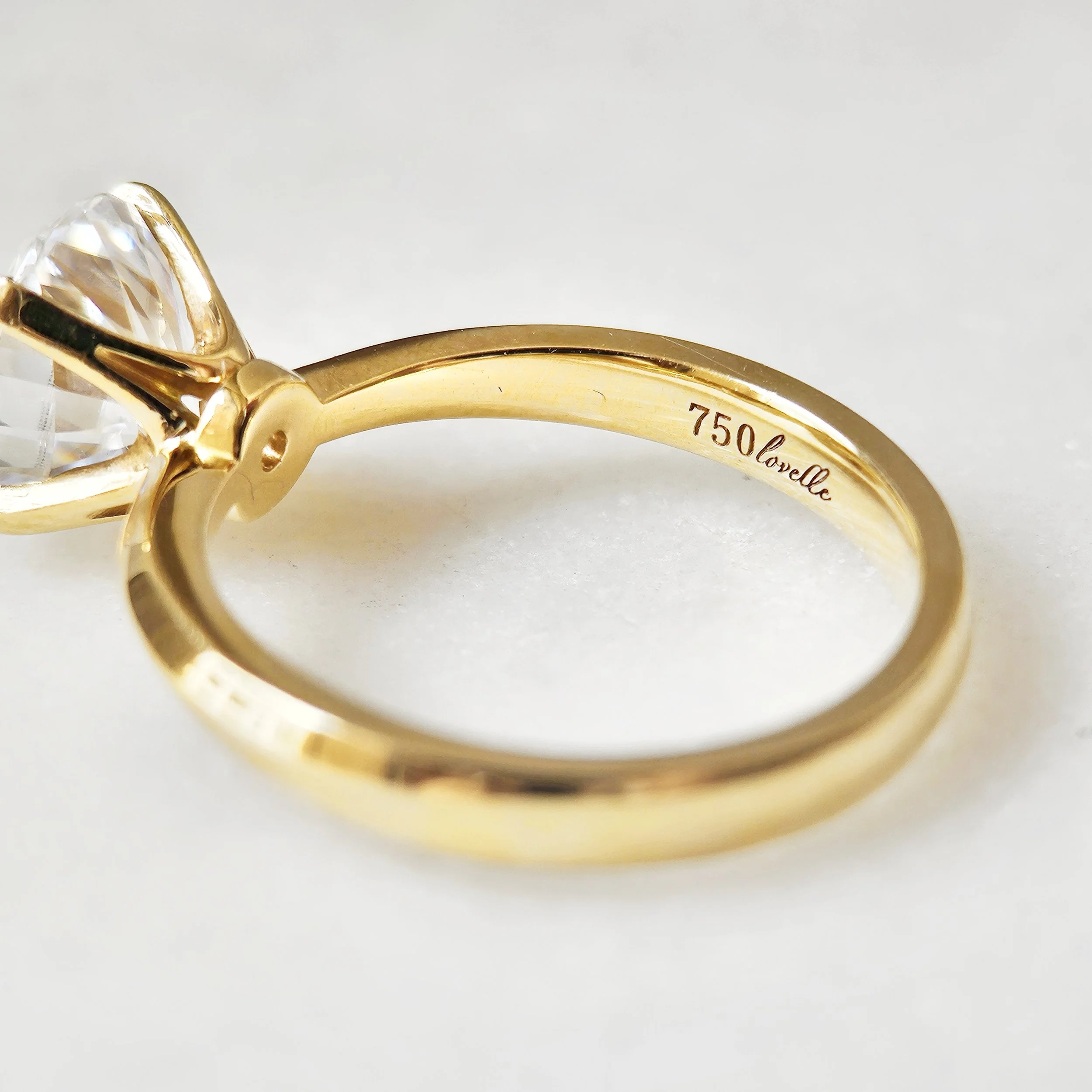
All rings from Lovelle Jewellery are hallmarked to indicate metal purity:
Au750 – 18K Gold
Au585 – 14K Gold
Au375 – 9K Gold
Each ring is also engraved with the Lovelle brand name. Some designs may include engravings indicating the centre or side stone carat weight.
Personalised engraving—such as initials, dates, or meaningful messages—can be added upon request. Please note that additional fees may apply.